Most car owners do not think about the timing belt until it breaks. And by then, the damage is already done. A snapped timing belt can wreck the engine in seconds, turning a $500 replacement into a $3,000 to $5,000 repair bill.
If your vehicle runs on a timing belt, understanding what it does, when it fails, and when to replace it can save you from one of the most expensive engine repairs out there.
What Does a Timing Belt Do in Your Engine
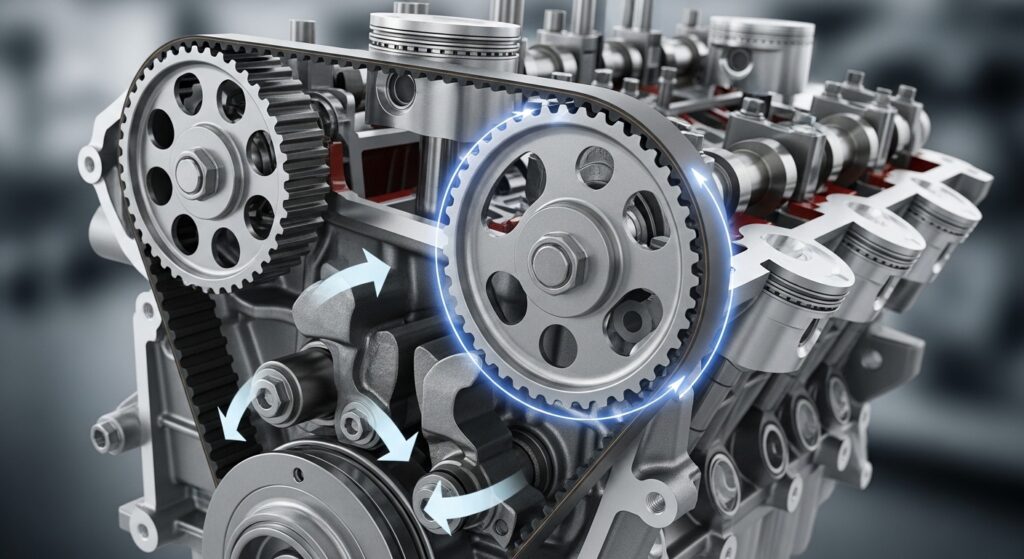
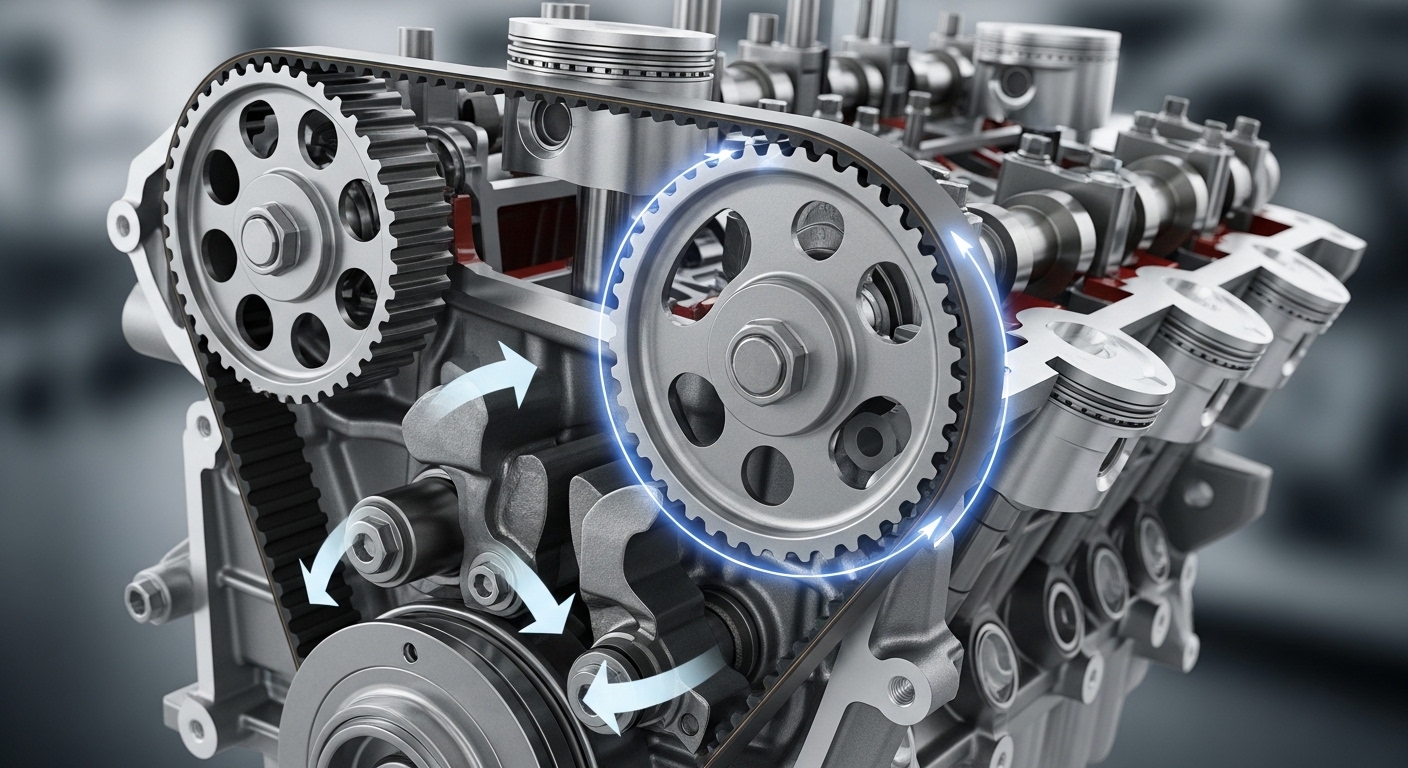
The timing belt is a rubber belt with teeth on the inner side that connects the crankshaft to the camshaft. Its job is to keep these two components in sync. The crankshaft controls the pistons, and the camshaft controls the valves. Both need to move in coordination for the engine to run.
When the timing is off by even a fraction, the engine misfires, loses power, and runs rough. When the belt snaps, the pistons and valves collide inside the cylinder. In what mechanics call an “interference engine,” this collision bends valves, damages pistons, and can crack the cylinder head.
According to the Car Care Council, timing belt failure is one of the leading causes of preventable engine damage in vehicles with more than 60,000 miles.
Warning Signs That Your Timing Belt Is Wearing Out
A timing belt does not always give clear warnings before it fails. But in many cases, you will notice signs that something is off if you pay attention.
Ticking or Clicking Noise From the Engine
A worn belt loses tension over time. When it does, it produces a ticking or clicking sound that comes from the front of the engine. This noise speeds up and slows down with the RPMs. If you hear it during idle or while accelerating, the belt may be loose or starting to crack.
Engine Misfires or Rough Idle
When the belt slips even by one tooth on the camshaft gear, the valve timing shifts. This causes misfires, a rough idle, and a noticeable loss of power during acceleration. The engine may also stall at low speeds or during stop-and-go traffic.
Oil Leaking Near the Front of the Engine
The timing belt sits behind a cover at the front of the engine. If the cover gasket or seals wear out, oil leaks onto the belt. Oil degrades rubber and accelerates wear, shortening the belt’s lifespan. If you notice oil pooling near the lower front of the engine, it is worth having the engine diagnostics and electrical system checked, along with the belt.
The Engine Will Not Start
If the belt has already snapped, the engine will crank but will not start. At this point, the damage may already be done. Towing the vehicle and replacing the belt is the minimum. In many cases, the valve train and pistons need repair or replacement as well.
When Should You Replace the Timing Belt
Most vehicle manufacturers recommend timing belt replacement between 60,000 and 100,000 miles, depending on the make and model. Some vehicles list the interval at 90,000 miles, while others push it to 105,000. You will find this information in your owner’s manual under the scheduled maintenance section.
However, mileage is not the only factor. Time also degrades rubber. If your car is 7 to 10 years old and the belt has not been replaced, the rubber may have dried out and cracked, even if the mileage is low. Vehicles that sit idle for long periods are at higher risk for this type of wear.
What Gets Replaced Along With the Timing Belt
When a mechanic performs a timing belt service, they often recommend replacing related components at the same time because labor costs overlap. These include:
- Water pump, which is driven by or located near the timing belt
- Tensioner and idler pulleys that keep the belt tight and aligned
- Front engine seals that prevent oil from reaching the belt
- Serpentine belt, if it is due for replacement based on mileage
Replacing all of these together costs less than doing them separately because the mechanic already has the belt cover and components exposed.
Timing Belt vs Timing Chain
Not every vehicle uses a belt. Some use a timing chain, which is made of metal and lasts longer. Timing chains do not have a set replacement interval and can last the life of the engine in many cases. However, they still wear out over time, especially if oil changes are skipped or delayed.
Check your owner’s manual or ask your mechanic to confirm which system your vehicle uses. If your car has a belt, it needs scheduled replacement. If it has a chain, it still needs monitoring for stretch and wear.
The Cost of Ignoring Timing Belt Replacement
A timing belt replacement costs between $300 and $700 on average, depending on the vehicle. That number may seem high for a maintenance item. But compare it to the cost of engine damage from a snapped belt.
The AAA Foundation reports that engine repair costs from timing belt failure range from $2,000 to $5,000 or more. In some cases, the engine needs full replacement, which can exceed the vehicle’s value.
A1st Auto Repair Provides Timing Belt Service in Edison NJ
At A1st Auto Repair, the team handles timing belt inspection and replacement for all vehicle makes and models. From checking belt condition and tensioner health to replacing the full timing component set, every service is done with the goal of keeping your engine running without interruption.
Contact A1st Auto Repair today and get your belt inspected before a small maintenance job turns into a total engine failure.