
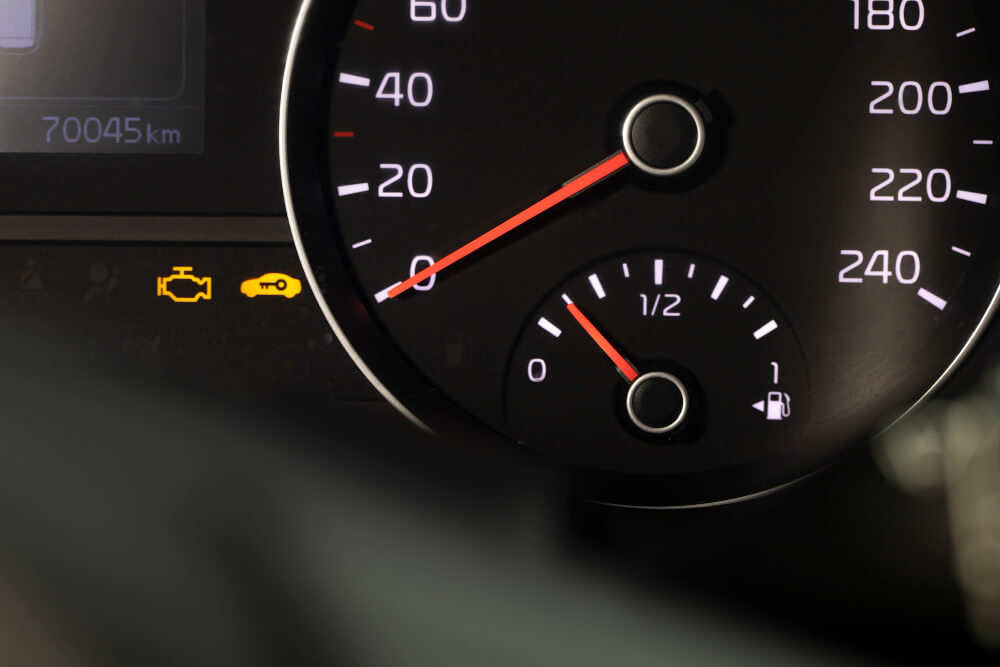
A check engine light can come on for something as minor as a loose gas cap or as serious as an engine misfire. The light itself does not tell you which part has failed. It only means the vehicle’s onboard diagnostic system has detected a condition outside its expected range.
Understanding common OBD2 codes can help you make sense of what the vehicle is reporting before repairs begin. The important point is that a diagnostic trouble code identifies the system or fault area that needs investigation. It does not automatically tell you which component should be replaced.
That distinction can prevent expensive guesswork.
What Is an OBD2 Code?
OBD2 stands for On-Board Diagnostics II. Passenger vehicles sold in the United States have used standardized onboard diagnostic requirements since the 1996 model year, allowing compatible scan tools to retrieve diagnostic trouble codes from many makes and models.
SAE J2012 defines the standardized diagnostic trouble code format used by vehicle onboard diagnostic systems. EPA documentation also explains that a stored DTC uses five characters to identify the vehicle area, code type, affected system, and specific fault.
What the First Character Means
You will usually see codes beginning with one of four letters:
- P: Powertrain, including engine and transmission systems
- B: Body systems
- C: Chassis systems
- U: Network or communication systems
Most check engine light questions involve P-codes because emissions, ignition, fuel delivery, engine management, and transmission issues fall within the powertrain category.
Generic vs Manufacturer-Specific Codes
The second character also matters.
A 0 commonly indicates a generic standardized code, while a 1 can identify a manufacturer-specific code.
That means P0300 has a standardized meaning across many vehicles, while another code may require information specific to the manufacturer.
Why Reading the Code Is Only the First Step
A scan tool can retrieve a code in seconds, but diagnosis takes more work.
Suppose a vehicle stores P0171, which indicates a lean condition. The code does not say, “replace the oxygen sensor.” A vacuum leak, weak fuel delivery, contaminated airflow sensor, exhaust leak, or several other conditions could create the same result.
A Proper Diagnostic Process May Include
- Retrieving all stored and pending codes.
- Reviewing freeze-frame data.
- Checking live sensor readings.
- Looking for related technical symptoms.
- Testing the affected system.
- Confirming the repair before clearing the code.
This is why replacing parts based only on a code description can waste money.
P0300: Random or Multiple Cylinder Misfire Detected
P0300 is one of the most important common OBD2 codes because it means the engine computer has detected misfires affecting more than one cylinder or occurring unpredictably.
A misfire happens when combustion does not occur correctly in a cylinder.
Symptoms Can Include
- Rough idle
- Shaking
- Poor acceleration
- Reduced fuel economy
- Engine hesitation
- Flashing check engine light
- Lack of power
Possible Causes
P0300 can be related to:
- Worn spark plugs
- Ignition coil problems
- Fuel injector faults
- Vacuum leaks
- Low fuel pressure
- Engine compression problems
- Airflow or fuel-mixture issues
The code alone cannot determine which of these is responsible.
Is P0300 Urgent?
It can be.
If the check engine light is flashing while the engine is misfiring, continuing to drive can allow unburned fuel to reach the catalytic converter and cause additional damage.
A severe misfire should be diagnosed promptly.
P0301 Through P0308: Misfire on a Specific Cylinder
Codes P0301, P0302, P0303, and similar codes identify misfires in a particular cylinder.
For example:
- P0301: Cylinder 1 misfire
- P0302: Cylinder 2 misfire
- P0303: Cylinder 3 misfire
- P0304: Cylinder 4 misfire
The pattern continues according to engine cylinder count.
Why a Specific Cylinder Helps Diagnosis
If only one cylinder is affected, testing can focus more closely on:
- That cylinder’s spark plug
- Ignition coil
- Fuel injector
- Wiring
- Compression
- Intake leak near that cylinder
It still does not automatically mean the coil or spark plug is bad. Testing is needed before replacement.
P0420: Catalyst System Efficiency Below Threshold, Bank 1
P0420 is another widely encountered code.
It means the engine computer has determined that the catalytic converter on Bank 1 is not performing at the expected efficiency level. The system typically compares signals from oxygen sensors located before and after the converter to evaluate catalyst operation.
Possible Causes Include
- Worn catalytic converter
- Exhaust leak
- Oxygen sensor problem
- Engine misfire
- Fuel-mixture issue
- Engine burning oil or coolant
That last group matters.
A catalytic converter may fail because another engine problem damaged it. Replacing the converter without correcting the cause can allow the new one to fail too.
What Does Bank 1 Mean?
Bank 1 refers to the side of the engine containing cylinder number one.
On an inline engine, there is typically only one bank. On V-type engines, identifying the correct side matters when diagnosing bank-specific codes.
Also Read:
P0430: Catalyst Efficiency Below Threshold, Bank 2
P0430 is similar to P0420, but it applies to Bank 2.
Vehicles with two cylinder banks may have separate catalytic converter monitoring for each side.
P0420 vs P0430
| Code | System |
| P0420 | Catalyst efficiency below threshold, Bank 1 |
| P0430 | Catalyst efficiency below threshold, Bank 2 |
If both codes appear, diagnosis should consider conditions that could affect both banks rather than assuming both converters failed independently.
P0171: System Too Lean, Bank 1
P0171 means the engine computer is correcting for a mixture that contains too much air or not enough fuel on Bank 1.
The engine continuously adjusts fuel delivery based on sensor feedback. When correction reaches a point beyond the expected range, the system can store a lean code.
Common Causes Can Include
- Vacuum leaks
- Intake hose leaks
- Dirty or faulty mass airflow sensor
- Low fuel pressure
- Weak fuel pump
- Restricted fuel injector
- Exhaust leak before an oxygen sensor
- PCV system problems
Possible Symptoms
You may notice:
- Rough idle
- Hesitation
- Poor acceleration
- Difficult starting
- Reduced power
- Engine stalling
Some vehicles may show almost no obvious symptoms other than the warning light.
P0174: System Too Lean, Bank 2
P0174 means the same basic lean condition exists on Bank 2.
When P0171 and P0174 appear together, it can provide an important diagnostic clue.
Two Lean Codes Can Point Toward a Shared Cause
If both banks are lean, a technician may investigate conditions affecting the entire engine, such as:
- Major vacuum leak
- Mass airflow sensor problem
- Low fuel pressure
- Intake-system issue
This can be more useful than replacing individual oxygen sensors based on the code names.
P0455: Large EVAP System Leak Detected
P0455 relates to the evaporative emissions system, or EVAP system.
The EVAP system captures fuel vapors so they are not released directly into the atmosphere. EPA documentation identifies P0455 as an evaporative-emission control system gross-leak code and notes that a missing or faulty gas cap is one possible cause.
Possible Causes Include
- Loose gas cap
- Damaged gas cap seal
- Cracked EVAP hose
- Disconnected hose
- Leaking purge or vent valve
- Damaged charcoal canister
- Larger leak elsewhere in the EVAP system
Start With the Gas Cap, But Do Not Stop There
If the cap was left loose after refueling, tightening it may correct the original problem. The check engine light may not switch off immediately because the vehicle may need to complete additional self-tests.
If the code returns, the EVAP system should be tested for leaks instead of repeatedly replacing the cap.
P0442: Small EVAP System Leak Detected
P0442 is similar to P0455 but indicates that the system detected a smaller leak.
Finding a small EVAP leak can be more difficult because it may come from a tiny crack, seal, hose connection, or valve problem.
Diagnosis May Require a Smoke Test
A smoke machine can introduce visible vapor into the EVAP system under controlled conditions. Escaping smoke can help identify leaks that are too small to see during a normal visual inspection.
This is a good example of why a scan result alone may not lead directly to the failed part.
P0440: EVAP System Malfunction
P0440 is a broader evaporative-emissions code.
It indicates that the vehicle has detected a problem in the EVAP system but does not narrow the fault as specifically as some other EVAP codes.
A technician may need to inspect:
- Gas cap and filler neck
- Hoses
- Purge valve
- Vent valve
- Charcoal canister
- Wiring
- Pressure sensors
Related codes can provide additional direction.
P0128: Coolant Thermostat Temperature Below Regulating Temperature
P0128 usually means the engine is not reaching its expected operating temperature within the expected period.
A thermostat stuck partially open is one possible cause because coolant can circulate too early and keep the engine cooler than intended.
Other Possible Causes
- Low coolant
- Coolant-temperature sensor problem
- Wiring issue
- Incorrect thermostat
- Cooling-system problem
Why Engine Temperature Matters
The engine computer uses temperature information to control:
- Fuel mixture
- Emissions systems
- Cooling fan operation
- Idle strategy
- Other engine functions
A vehicle that runs too cool can also take longer to produce cabin heat in winter.
P0101: Mass Airflow Sensor Range or Performance Problem
P0101 means the mass airflow sensor signal does not match what the engine computer expects under the current operating conditions.
The mass airflow sensor measures air entering the engine so fuel delivery can be adjusted.
The Sensor Is Not Always the Problem
Possible causes include:
- Dirty mass airflow sensor
- Air intake leak
- Damaged intake hose
- Air filter issue
- Wiring problem
- Vacuum leak
- Sensor failure
Replacing the sensor immediately may not fix the vehicle if unmetered air is entering through a cracked intake hose.
P0011: Camshaft Timing Over-Advanced, Bank 1
P0011 relates to variable valve timing.
The engine computer has detected that the intake camshaft timing on Bank 1 is more advanced than expected.
Possible Causes Include
- Low engine oil
- Dirty engine oil
- Incorrect oil viscosity
- Variable valve timing solenoid problem
- Restricted oil passage
- Camshaft timing issue
- Wiring fault
Oil condition matters because many variable-valve-timing systems depend on engine oil pressure to adjust camshaft position.
That is why proper maintenance can directly affect some check engine light problems.
P0401: Exhaust Gas Recirculation Flow Insufficient
P0401 means the engine computer has detected insufficient exhaust gas recirculation, or EGR, flow.
The EGR system introduces a controlled amount of exhaust gas back into the engine under certain operating conditions to help control combustion temperature and emissions.
Possible Causes
- Carbon buildup
- Blocked EGR passages
- Sticking EGR valve
- Sensor problem
- Vacuum-control issue
- Wiring fault
Carbon buildup can sometimes restrict flow even when the EGR valve itself still operates.
P0500: Vehicle Speed Sensor Malfunction
P0500 relates to vehicle speed information.
Depending on the vehicle, speed data may affect the speedometer, transmission operation, ABS-related systems, engine control, or other modules.
Symptoms May Include
- Incorrect speedometer reading
- Transmission shifting problems
- Check engine light
- Traction or ABS warning lights on some vehicles
Because modern vehicles share information between control modules, one sensor fault can sometimes trigger several warning lights.
What Does a Flashing Check Engine Light Mean?
A steady check engine light usually indicates a stored fault that needs diagnosis.
A flashing light deserves more immediate attention.
A flashing check engine light commonly indicates a severe misfire capable of damaging the catalytic converter.
If the Light Flashes and the Engine Runs Poorly
Reduce driving and have the problem checked promptly, especially if you notice:
- Strong shaking
- Major power loss
- Fuel smell
- Engine stumbling
- Unusual exhaust smell
Continuing to drive can turn an ignition or fuel problem into a much more expensive exhaust-system repair.
Can You Drive With a Check Engine Light On?
It depends on the code and symptoms.
Often Less Urgent
A vehicle that runs normally with a steady light may sometimes be driven a short distance for diagnosis.
More Urgent
Avoid unnecessary driving when:
- The light is flashing.
- The engine is overheating.
- Oil-pressure warning appears.
- The vehicle is shaking badly.
- Acceleration has dropped sharply.
- Smoke appears.
- Strong fuel odor develops.
A trouble code should always be interpreted together with what the vehicle is doing.
Do Not Clear the Code Before Diagnosis
It can be tempting to erase the code just to turn the warning light off.
That can also erase useful information.
Diagnostic systems may store freeze-frame data showing conditions when the fault occurred, including engine speed, load, temperature, and other readings depending on the vehicle.
Clearing the code too early can remove some of that information and make an intermittent problem harder to reproduce.
Retrieve and document the codes first.
Common OBD2 Codes at a Glance
| Code | General Meaning | Common Diagnostic Area |
| P0300 | Random/multiple misfire | Ignition, fuel, air, compression |
| P0301-P0308 | Specific cylinder misfire | Cylinder-specific ignition, fuel or mechanical issue |
| P0420 | Catalyst efficiency, Bank 1 | Catalytic converter, sensors, engine condition |
| P0430 | Catalyst efficiency, Bank 2 | Catalytic converter, sensors, engine condition |
| P0171 | System lean, Bank 1 | Vacuum leaks, airflow, fuel delivery |
| P0174 | System lean, Bank 2 | Vacuum leaks, airflow, fuel delivery |
| P0455 | Large EVAP leak | Gas cap, hoses, valves, canister |
| P0442 | Small EVAP leak | Small leaks, seals, valves, hoses |
| P0128 | Coolant temperature below target | Thermostat, coolant, temperature sensor |
| P0101 | MAF range/performance | Airflow sensor, intake leak, wiring |
| P0011 | Cam timing over-advanced | Oil, VVT system, cam timing |
| P0401 | Insufficient EGR flow | EGR valve, passages, sensors |
| P0500 | Vehicle speed sensor fault | Sensor, wiring, speed-data system |
This table is useful for orientation, not for choosing replacement parts.
Diagnose the Cause Before Replacing Parts
The biggest mistake with common OBD2 codes is treating a scanner description as a repair instruction. P0420 does not automatically mean “buy a catalytic converter,” P0171 does not automatically mean “replace the oxygen sensor,” and P0301 does not automatically mean “replace the coil.”
A proper diagnosis follows the code into the affected system and tests the likely causes before parts are ordered.
A1st Auto Repair provides engine diagnostics and electrical troubleshooting in Edison, including check engine light diagnosis, misfires, starting problems, and other engine-related faults. If your vehicle has stored one or more common OBD2 codes, schedule an engine diagnostic with A1st Auto Repair so the underlying problem can be identified before unnecessary parts are replaced.

