
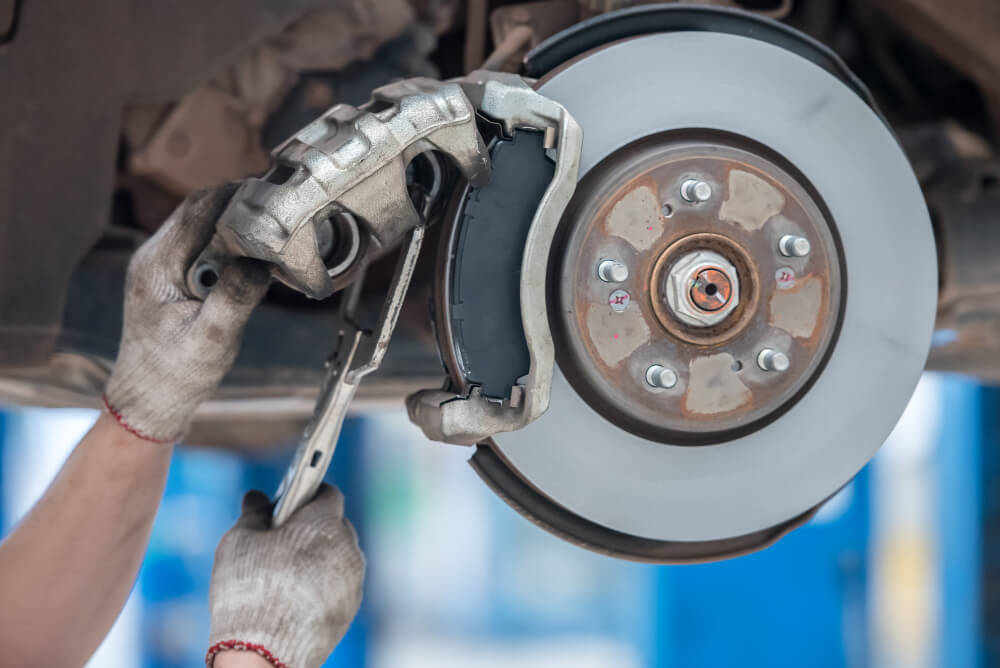
Your brake pads press against the rotors every time you slow or stop the car. Over time, that repeated friction wears both components. Rotor problems do not always appear as one obvious failure. You may first feel a vibration through the pedal, notice the steering wheel shake during braking, or hear a grinding sound that was not there before.
Knowing the main brake rotor replacement signs can help you arrange an inspection before brake performance becomes worse. However, symptoms alone do not confirm that a rotor needs replacement. A technician should measure rotor thickness, check the braking surfaces, inspect the pads and calipers, and compare the results with the vehicle manufacturer’s specifications. A1st Auto Repair’s current brake service includes checks for pad thickness, rotor wear and alignment, caliper function, and brake-fluid condition.
-
Brake Pedal Pulsation Can Point to Uneven Rotor Thickness
One of the most common brake rotor replacement signs is a pulsing sensation through the brake pedal.
You may press the pedal smoothly, but instead of feeling steady resistance, the pedal seems to push back in a repeating rhythm. The sensation may become easier to notice when slowing from higher speeds.
Brake-pedal pulsation can occur when the rotor has developed thickness variation. As different areas of the rotor pass through the brake caliper, variations in the braking surface can create changes in braking force.
Vehicle manufacturer guidance explains that rotor thickness variation can create both pedal pulsation and vehicle vibration during braking.
Drivers often call this condition a “warped rotor,” but that description can be too simple. Uneven wear, excessive heat, installation problems, corrosion, or lateral runout can all contribute to a rotor that no longer provides a consistent braking surface.
An inspection is needed to determine whether the rotor can still be serviced or has reached the point where replacement is required.
-
Steering Wheel Vibration While Braking Needs a Brake Inspection
A steering wheel that shakes while braking is another symptom that can be connected with front brake rotors.
The vibration often becomes more noticeable when slowing from highway speed or during harder braking.
Rotor thickness variation can send vibration through the brake and suspension system, which the driver may feel through the steering wheel. Manufacturer service guidance connects steering-wheel shaking during braking with variations in rotor thickness.
However, vibration is not automatically proof of a bad rotor.
Tire problems, wheel balance, worn suspension parts, wheel-bearing issues, or other mechanical conditions can also create vibration. The timing of the symptom matters. If the shaking appears mainly when you press the brake pedal, the braking system becomes a stronger place to investigate.
A wheel alignment service may also be relevant when the car pulls, tires wear unevenly, or steering problems occur outside braking. The symptoms should be separated before parts are replaced.
-
Grinding Brake Noise Can Mean the Rotor Surface Is Being Damaged
A grinding sound during braking needs attention.
Worn brake pads are one possible cause. When friction material becomes too thin, metal components can contact the rotor surface and damage it.
The rotor may develop deep grooves or lose enough material that installing new pads alone no longer provides a suitable braking surface.
Not every brake noise means the rotors need replacement. Some brake systems produce occasional squeaks under certain weather or operating conditions. Manufacturer guidance notes that some brake noise can occur normally, but recurring or unusual noise should be inspected.
Grinding is different from a light squeak.
If the sound is harsh, metallic, and appears whenever you apply the brakes, limit driving until the system can be checked. Continuing to drive on severely worn pads can increase damage to the rotor and other brake components.
-
Deep Grooves and Scored Brake Rotors Can Require Replacement
A rotor does not need to be smooth enough to look polished, but its braking surface should not have deep channels, heavy scoring, or large damaged sections.
Light surface marks can develop during normal use.
Deep grooves deserve closer inspection.
Scoring can develop when worn brake pads, debris, damaged hardware, or another braking problem causes uneven contact with the rotor. Once the grooves become substantial, the new brake pad cannot contact the rotor surface in the intended way.
This is one reason a brake inspection should include both the pads and rotors instead of replacing pads automatically.
A technician can inspect the rotor surface and measure its remaining thickness.
If correcting the surface would leave the rotor below its permitted minimum thickness, replacement is needed rather than further machining. Brembo’s technical guidance states that a rotor below its marked minimum thickness must be replaced.
-
A Brake Rotor Below Minimum Thickness Needs Replacement
This is one of the clearest brake rotor replacement signs because it is based on measurement rather than how the car feels.
Brake rotors have a minimum permitted thickness.
As the pads contact the rotor mile after mile, a small amount of rotor material wears away. The rotor eventually becomes thinner.
Brembo explains that rotor thickness should be measured at several points and compared with the minimum thickness marked on the rotor or specified for the vehicle. If the measurement is below that minimum, the rotor must be replaced.
There is no useful universal minimum thickness for every car.
Different vehicles and brake systems use different rotor dimensions. A technician needs the specification for the specific vehicle.
This is also why mileage alone should not decide when a rotor gets replaced. Driving habits, brake-pad material, vehicle weight, corrosion, heat, and previous rotor service can all affect how much usable material remains.
Measurement gives a better answer.
-
Heat Spots, Cracks, or Visible Rotor Damage Need Attention
Brakes convert the vehicle’s movement into heat.
Rotors are built to handle repeated heating and cooling, but unusual thermal stress can damage the braking surface.
A rotor inspection may reveal discoloration, heat checking, cracks, or other visible damage.
Repeated hard braking, a dragging caliper, or another brake-system fault can create excess heat. The important step is not simply replacing the damaged rotor. The cause of the heat also needs to be found.
Otherwise, a new rotor can be exposed to the same condition.
Rotor thickness matters here too. Brembo notes that reduced rotor thickness affects the component’s ability to manage heat and can contribute to brake fade under demanding conditions.
Cracks or severe structural damage should not be treated as a cosmetic problem.
The rotor needs professional evaluation, and the rest of the braking system should be checked for the condition that created the damage.
-
New Brake Pads Wear Unevenly, or Problems Return Quickly
Brake problems that return soon after pad replacement can point to another part of the braking system.
Suppose new pads are installed, but the car develops pulsation again, one pad wears much faster than another, or the braking surface shows uneven contact.
The rotor may have excessive variation, but a sticking caliper, slider problem, wheel-hub condition, installation issue, or another fault could also be involved.
This is why repeatedly installing new pads without checking the rotors can become expensive.
The current A1st brake-service process includes inspection of rotor wear, caliper operation, pad condition, and other brake-system components rather than treating the pad as the only wear item.
If brake symptoms return shortly after service, the complete brake assembly should be inspected before another set of parts is installed.
Also Read:
Do Brake Rotors Always Need Replacement With Brake Pads?
No.
Changing brake pads does not automatically mean the rotors must be replaced every time.
The decision should be based on rotor thickness, condition, surface variation, manufacturer specifications, and whether the rotor can provide an acceptable braking surface for the new pads.
Manufacturer guidance recommends inspecting rotors rather than assuming replacement is required with every pad change.
A rotor may remain within specification and in usable condition when the pads need replacement.
On another vehicle, worn pads may have already damaged the rotor enough that both components need service.
Replacing good rotors adds unnecessary cost. Installing new pads against damaged or undersized rotors can leave the original braking problem unresolved.
Inspection separates those situations.
Can Brake Rotors Be Resurfaced Instead of Replaced?
Some rotors can be machined or resurfaced if sufficient material remains and the vehicle manufacturer permits it.
Resurfacing removes material to create a more consistent braking surface.
The limitation is thickness.
The rotor must still remain above the required minimum after machining. A rotor that is already close to its discard specification may not have enough material left for resurfacing.
Technical service information submitted to NHTSA also shows that manufacturers can specify when machining is permitted for vibration or pulsation complaints, which means the decision should follow the vehicle’s repair information rather than one rule for every car.
Many modern repairs therefore come down to measurement and manufacturer procedure.
How Can You Tell Whether Brake Rotors or Pads Are Causing the Problem?
Drivers can notice symptoms, but separating pads from rotors often requires inspection.
A high-pitched wear-indicator squeal can point toward worn brake pads. Pulsation during braking can point more strongly toward rotor thickness variation. Grinding may mean the pads have worn enough to damage the rotor.
Several problems can occur together.
A brake inspection can check:
- Remaining brake-pad thickness
- Rotor thickness
- Rotor surface condition
- Uneven rotor wear
- Caliper operation
- Hardware and slider condition
- Brake-fluid condition
- Hose and line condition
This provides a better repair decision than replacing whichever part seems most likely from the driver’s seat.
Get Brake Rotor Replacement Signs Checked Before the Damage Spreads
A shaking steering wheel, pulsing brake pedal, grinding sound, scored rotor, or visible heat damage should not become part of normal driving. Some of these symptoms can come from other vehicle problems, but they all justify an inspection. The clearest replacement decision comes from measuring the rotor and comparing its condition with the manufacturer’s specification.
A1st Auto Repair provides brake inspections, brake repair, pad replacement, brake rotor replacement, fluid service, and related automotive repair in Edison, New Jersey. Its current brake service includes measuring pad thickness and rotor wear, checking caliper operation, and replacing rotors when their condition requires it. If you have noticed any of these brake rotor replacement signs, contact A1st Auto Repair to have the complete braking system checked before replacing parts based on symptoms alone.

